
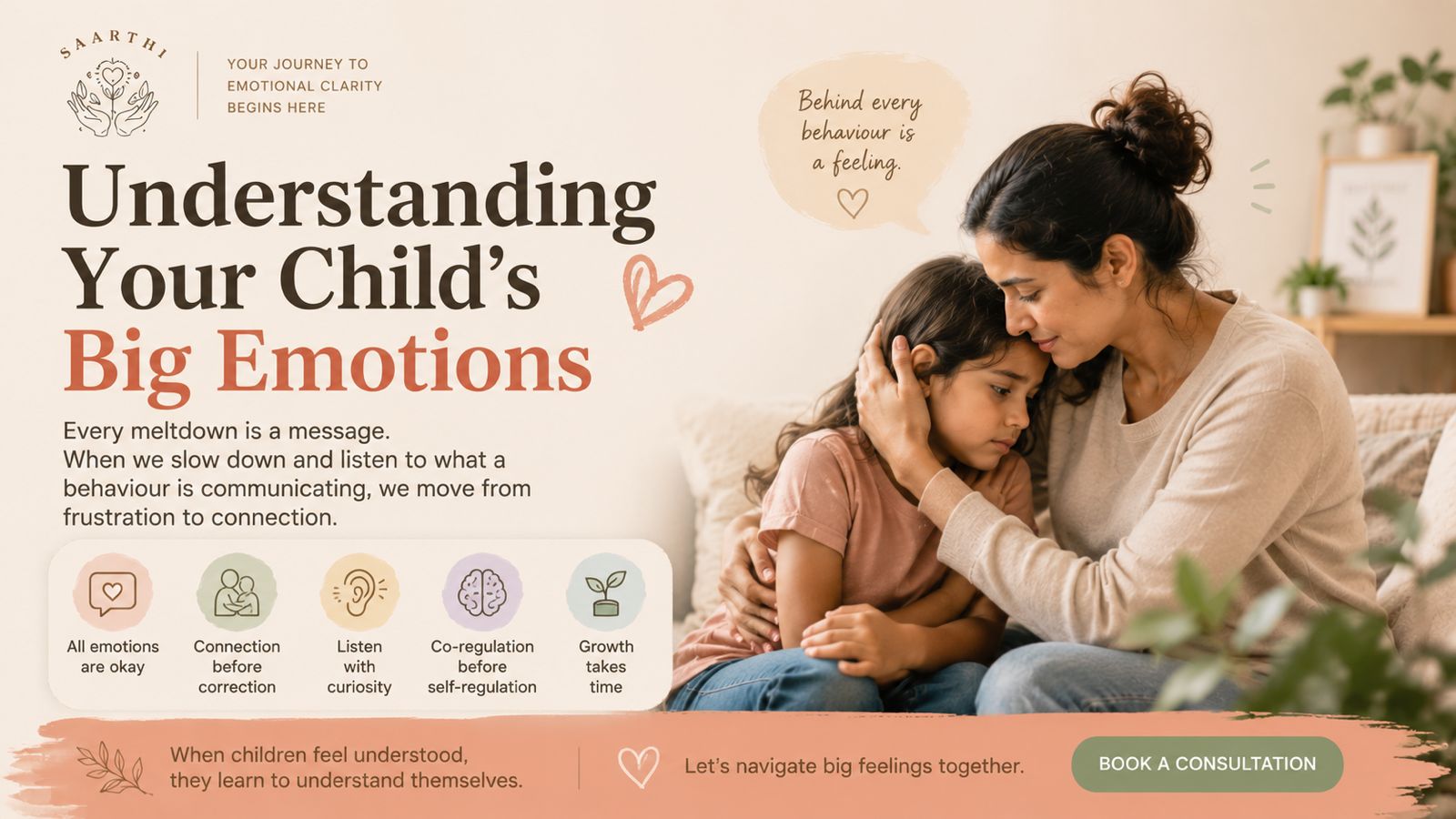
As parents, one of the most challenging moments can be watching our child experience intense emotions. Whether it’s a meltdown over a small disappointment, tears before school, anger when things don’t go their way, or fear of trying something new, these moments can leave parents feeling confused, frustrated, or helpless.
Many parents wonder:
“Why is my child reacting so strongly?”
“Am I doing something wrong?”
“How can I help my child calm down?”
The truth is that big emotions are a normal part of childhood. They are not signs of a “bad” child or poor parenting.
Instead, they are opportunities for children to learn emotional awareness, resilience, and self-regulation—with the support of a caring adult.
What Are “Big Emotions”?
Big emotions are feelings that seem overwhelming for a child to manage on their own. These may include:
* Anger
* Frustration
* Anxiety
* Fear
* Sadness
* Disappointment
* Jealousy
* Excitement that feels out of control
Children experience emotions just as deeply as adults, but they often lack the language, life experience, and coping skills needed to understand and express them effectively.
Imagine feeling worried, angry, or disappointed but not knowing how to explain it. For many children, emotions come out through behaviour before they can be expressed through words.
When Behaviour Is Actually Communication
Children often communicate their emotional struggles through their actions.
You might notice:
* Frequent tantrums or meltdowns
* Crying over seemingly small issues
* Withdrawal or silence
* Aggressive behaviour
* Difficulty concentrating
* Clinginess
* Changes in sleep or eating patterns
Instead of asking, “What’s wrong with my child?” it can be helpful to ask:
“What is my child trying to tell me through this behaviour?”
Behaviour is often the visible expression of an invisible emotion.
Why Children Need Co-Regulation Before Self-Regulation
One common misconception is that children should simply “calm down” when they’re upset.
However, emotional regulation is a skill that develops gradually.
Before children can regulate themselves, they first learn to regulate with a trusted adult. This process is called co-regulation.
When a child is overwhelmed:
* They need connection before correction.
* They need understanding before solutions.
* They need safety before learning.
A calm, supportive adult helps a child’s nervous system return to a state where they can think, learn, and problem-solve.
Practical Ways to Support Big Emotions
1. Name the Emotion
Help your child build emotional vocabulary.
Try saying:
* “You seem really disappointed.”
* “I can see you’re feeling frustrated.”
* “That looked scary for you.”
When children hear their emotions named, they begin to understand what they are experiencing.
2. Validate Before You Fix
Validation does not mean agreeing with every behaviour. It means acknowledging the feeling behind it.
Instead of:
❌ “It’s not a big deal.”
Try:
✅ “I can see this feels really important to you right now.”
Feeling understood often reduces emotional intensity.
3. Stay Calm During Emotional Storms
Children borrow emotional regulation from adults.
The calmer you remain, the more secure your child feels.
This doesn’t mean suppressing your own emotions. It means responding thoughtfully rather than reacting impulsively.
4. Create a Safe Space for Feelings
Teach children that all emotions are welcome, even when certain behaviours are not.
A helpful message is:
“It’s okay to feel angry. It’s not okay to hurt others when you’re angry.”
This helps children learn healthy emotional expression without shame.
5. Teach Coping Strategies When Calm
Children learn best when they are regulated.
Practice skills such as:
* Deep breathing
* Drawing emotions
* Movement breaks
* Sensory activities
* Positive self-talk
* Emotion journals
* Calm-down corners
These tools become more effective when introduced during calm moments rather than in the middle of a meltdown.
Remember: Emotional Growth Takes Time
Learning to manage emotions is a lifelong skill.
Just as children need years to learn reading, writing, or mathematics, emotional regulation develops through repeated experiences of support, guidance, and practice.
Progress may look like:
* A child recovering more quickly from disappointment.
* Using words instead of aggression.
* Asking for help when overwhelmed.
* Recognizing feelings independently.
These small moments are powerful signs of emotional growth.
How Counselling Can Help
Sometimes children need additional support to understand and manage their emotions. Through child counselling, play-based interventions, emotional skill-building activities, and parent guidance, children can learn healthy ways to express their feelings and build resilience.
At Saarthi Emotional Wellness, we believe that every behaviour has a story and every emotion deserves understanding. Our goal is to help children feel seen, heard, and supported while empowering parents with practical tools to navigate their child’s emotional world with confidence.
Final Thoughts
Your child’s big emotions are not problems to eliminate – they are messages to understand.
When children feel safe enough to express their emotions and confident that a trusted adult will help them navigate those feelings, they develop the emotional foundation needed for lifelong well-being.
Because every child deserves a Saarthi – A guide who helps them navigate life’s emotional journey, one feeling at a time.
⸻
By Parnika Bansal
Counselling Psychologist & CBT Practitioner
Saarthi Emotional Wellness
Nurturing Emotional Well-Being, One Child at a Time 🌱